01 / BIOLOGY
Biology and evolution
Some recurring preferences may reflect evolved responses to cues associated with health, reproductive potential, or physical condition.
A BOOK BY LEE ARCHER
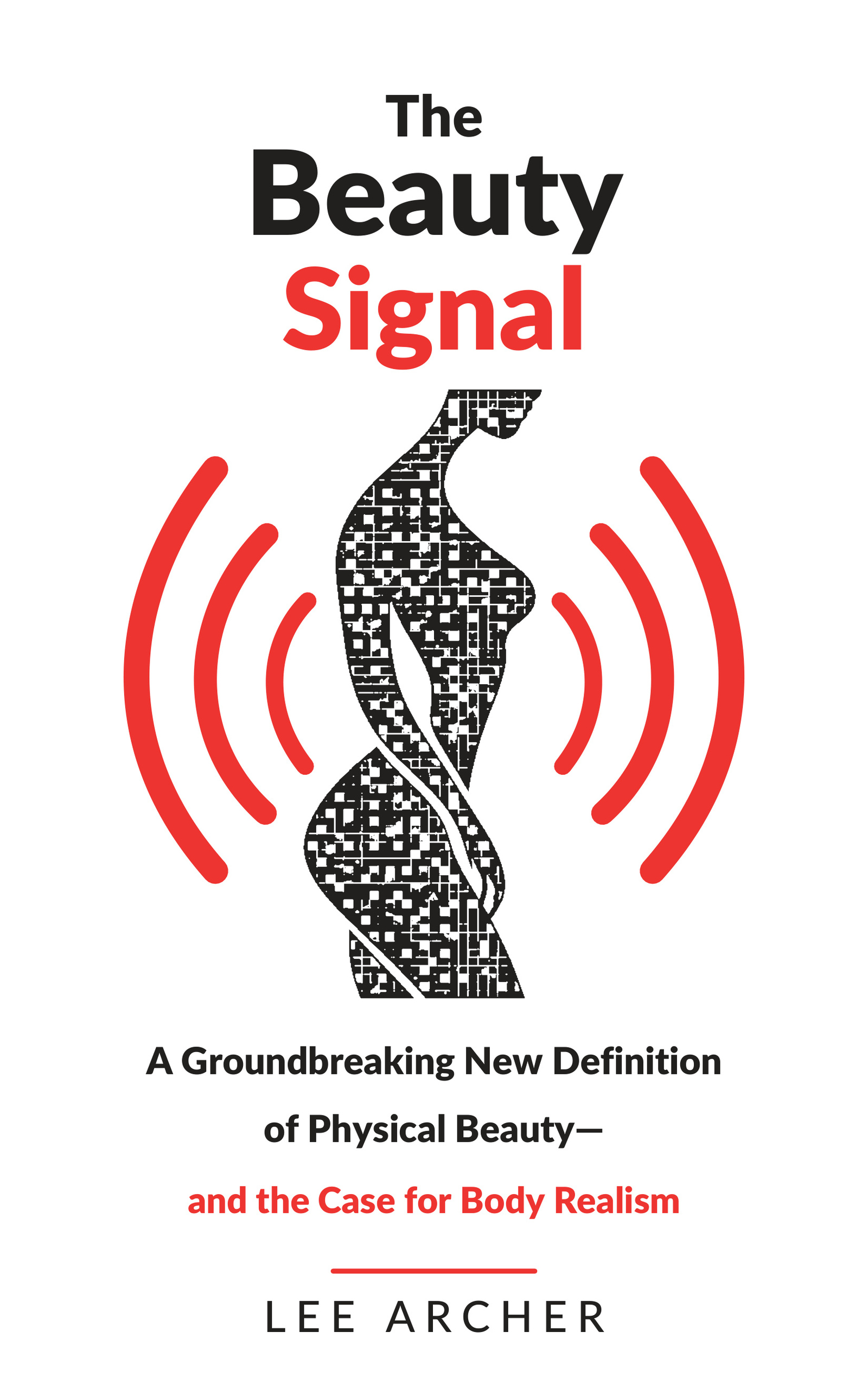
A Groundbreaking New Definition of Physical Beauty—and the Case for Body Realism
Why do we find some bodies beautiful? Why can the same body evoke different reactions in different people? In The Beauty Signal, Lee Archer explores how biology, culture, and personal experience shape attraction—and what our judgments of beauty can and cannot tell us.
The central idea
Physical beauty is neither simply a property of the body nor merely a matter of personal taste. In the framework Lee Archer proposes, it emerges from the relationship between a body’s characteristics and the values of the observer.
“A body is beautiful when it signals values that matter to the observer.”— Lee Archer, The Beauty Signal, Chapter 6
An appearance may be perceived as a sign of health, youth, fitness, or status—or evoke a deeply personal association. Such impressions can influence attraction even when they do not accurately describe the person we are looking at. The book explores how these signals acquire meaning, why that meaning changes, and what happens when we confuse physical appeal with personal worth.
Some recurring preferences may reflect evolved responses to cues associated with health, reproductive potential, or physical condition.
Cultures shape which appearances we associate with beauty, status, discipline, youth, or success. These associations change over time.
Experience, attachment, emotion, and individual values can change how we interpret a body—and whom we find attractive.
Evidence and interpretation
The book draws on research into physical attractiveness and the author’s own comparison of body measurements from beauty pageant finalists and female university students. The aim is not to establish a universal ideal, but to explore patterns in judgments of attractiveness.
The author examined body proportions, limb and torso measurements, skinfold thickness, and ratios between measurements. The study’s methods and main findings are described in the book’s appendix.
Research note: The study compares specific groups. It does not establish a universal standard of beauty or show that particular proportions cause attraction. The book’s broader definition of beauty is the author’s theoretical interpretation, informed by this study and other research.
A different response to beauty pressure
The book presents body realism as a way to acknowledge the social importance of physical attractiveness without making it a measure of human worth.
Body positivity challenges narrow beauty standards. Body neutrality encourages people to place less emphasis on appearance. Archer proposes a further perspective: acknowledge real differences in physical attraction without turning those differences into judgments of a person’s overall value.
Beauty may matter. Physical attractiveness can influence first impressions, the attention we receive, and social interactions.
Beauty is not everything. A person’s appearance is not a measure of intelligence, character, dignity, or worth.
Understanding creates agency. By examining the forces behind our judgments, we can make more deliberate choices about how much importance to give appearance.
“Physical beauty is a real value, but its absence does not determine a person's worth.”LEE ARCHER · THE BEAUTY SIGNAL, CHAPTER 17
Inside the book
The book moves from the study of attraction through changing beauty ideals and commercial pressures to questions of personal agency and the role of love.
Body proportions, physical cues, three influences on attraction, and the author’s definition of beauty.
What happens when beauty ideals change faster than the meanings we attach to them?
Beauty as a product, the inflation of beauty, and the gap between idealized images and everyday bodies.
How much can we shape our appearance, and what can body positivity and body neutrality offer?
Body realism, understanding beauty, and possible futures for physical attractiveness.
Why beauty involves more than sight—and how love may change what we perceive as beautiful.
Beyond first impressions
One of the book’s most personal passages poses a question that measurements alone cannot answer: Can falling in love change how we perceive someone’s body?
In the story of the Nameless Woman, Archer reflects on how emotional closeness may change physical attraction. The account does not deny the influence of appearance. It challenges the idea that appearance is all that matters.
This is a personal account and reflection, not a controlled experiment.
About the author
Lee Archer writes about human behavior, physical attractiveness, and the biological, cultural, and personal influences on beauty. His work connects research on body proportions with questions of identity, relationships, and self-perception.
The Beauty Signal presents his definition of physical beauty and develops body realism as a response to the pressures associated with appearance.
Questions readers ask
It is a nonfiction book about why we find certain bodies attractive, how beauty standards change, and how appearance affects the way we see ourselves and others. It brings together research, the author’s own measurements, and his proposed framework of body realism.
Archer defines it this way: “A body is beautiful when it signals values that matter to the observer.” He explores how biology, culture, and personal experience shape the values people associate with appearance.
Body realism acknowledges that physical attractiveness can affect our lives without treating it as a measure of human worth. Archer presents it as an alternative to both idealizing beauty and denying that it matters.
No. The book examines measurable body characteristics and patterns of preference, but emphasizes that perceptions also depend on the observer and the context. The study of pageant finalists supports part of the discussion; it is not a universal test of beauty.
Readers interested in the psychology of attraction, beauty standards, body image, cultural change, and the relationship between physical appearance and self-worth.
Discover the full argument
Explore the full argument, from body proportions and changing ideals to body realism and the role of personal attachment in attraction. Available in English as a Kindle eBook and paperback.